
Want to know how we help others in your industry?
What is Thermal Conductivity Measurement?
Measurement of the ability of a material to conduct heat.
On This Page:
Uses & Applications
Thermal conductivity measurements tell you how well a material is able to conduct or transfer thermal energy. Specific heat capacity describes the quantity of thermal energy required to increase the temperature of a material. Both metrics are vital for predicting the performance of various entities, including:
Insulators
Phase-change materials like oils, waxes and plastics
Heat exchangers
Evaporators
Refrigerators
Freezers
UNDERSTANDING OUR PROCESS
How Thermal Conductivity Testing Works
Thermal conductivity testing is widely used across multiple industries, including aerospace, automotive, textiles and additive manufacturing. Having a good understanding of how thermal energy conduction affects a material is crucial in predicting the behaviour of a system and design. Our lab measures the thermal conductivity of solids, liquids, pastes, and powders from -20 °C to 200 °C.
Discover how our thermal analysis experts can help your industry
Industries
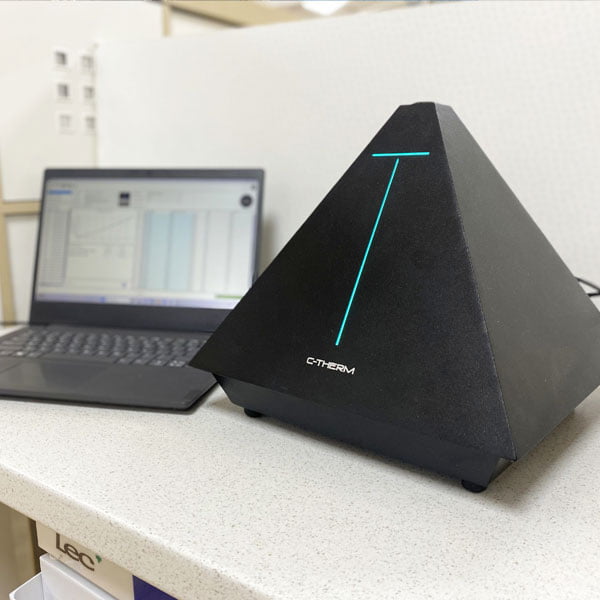
C-THERM TCi Trident
Are you seeking expert thermal sample testing services? Reach out to us today.
WHY IT MATTERS
Why Are Thermal Analysis Sample Testing Services Important?
The process of heat transfer seems intuitive at first glance, but overlooking it is easy if you’re not careful. Anyone who’s ever had a burnt barbecue has seen how low thermal conductivity and low heat capacity can be a challenge at high temperatures.
In industry, overlooking the thermal responses of a product can be a costly mistake. It can cause inefficiencies, discrepancies in quality or, at work, blockages and damages to your process. By engaging with a specialist thermal analysis service, you can understand the behaviours in depth and plan for them accordingly.
CLEAR, DETAILED RESULTS
Thermal Conductivity
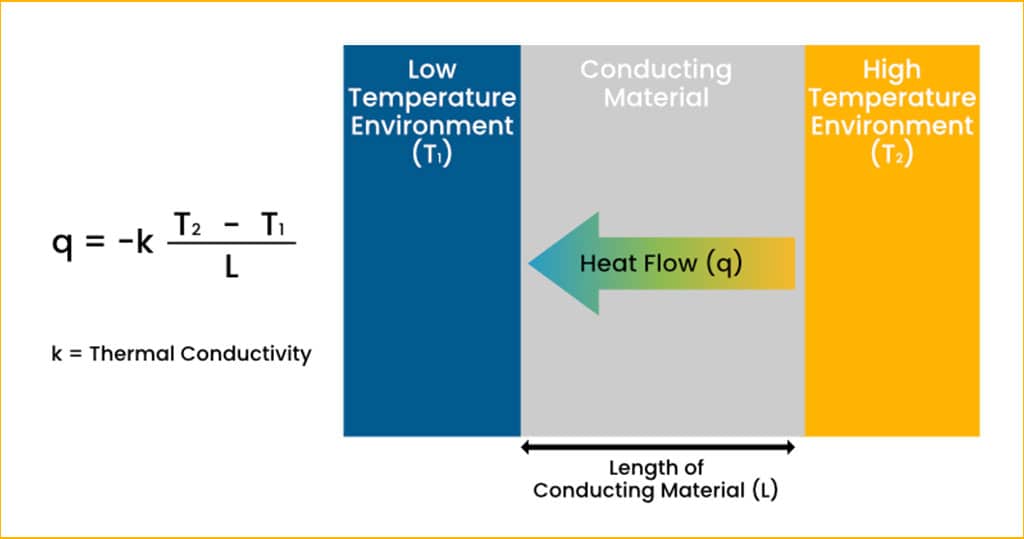
This describes the rate of heat flow across a temperature gradient within a material. For example, the ease at which thermal energy flows from the hot end to the cold end of the material. The SI unit for thermal conductivity is Watts per metre Kelvin.
A material with high thermal conductivity moves large amounts of heat quickly. Conversely, low thermal conductivity can cause materials to act as a barrier to heat transfer. Thermal conductivity is vital for thermal interface materials, which must be capable of facilitating heat transfer between two surfaces.
Ensuring perfect contact between two surfaces can be difficult. In our thermal conductivity measurement lab, we use thermal interface materials to fill in the gaps, providing a route for heat transfer, as shown below.
Do you want to learn more about our thermal analysis services? Try reading a case study.
View resources
MEASURING CHANGE
Thermal Diffusivity
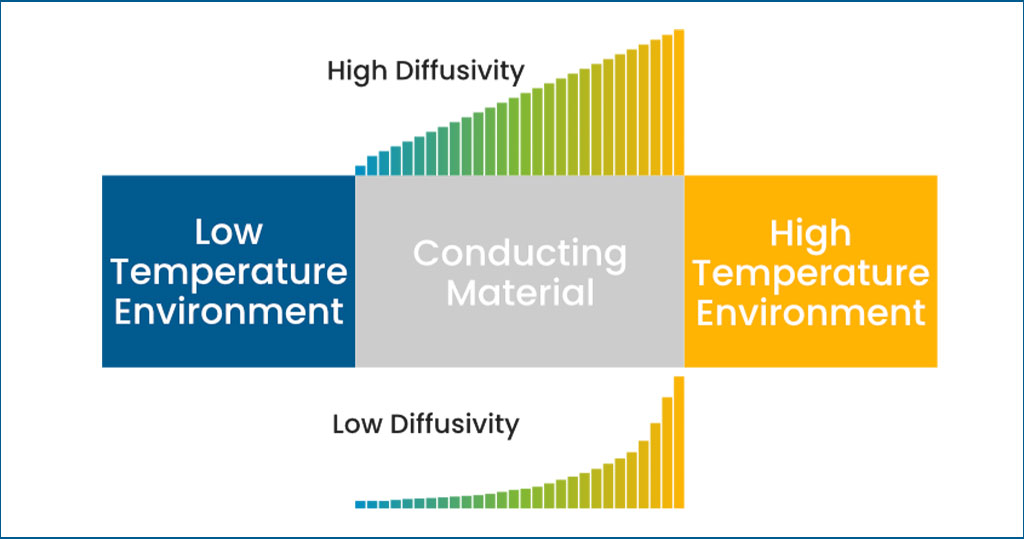
Thermal diffusivity is the rate at which temperature changes spread throughout the material and is obtained by dividing the thermal conductivity of a material by its own volumetric heat capacity.
A high thermal diffusivity indicates that a material will equilibrate rapidly, whereas a low diffusivity indicates a propensity for the internal temperature to change slowly as heat flows through. The SI units of thermal diffusivity are metres squared per second. Insulation material for both buildings and textiles helps prevent the loss of heat from a room, object or person and often has a low diffusivity.
EXPERT THERMAL ANALYSIS
Thermal Effusivity
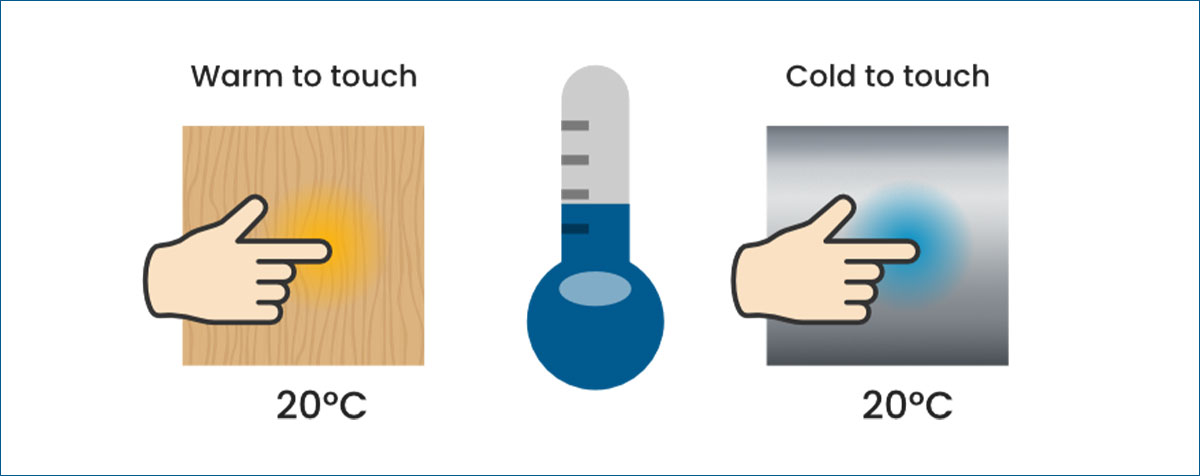
Thermal effusivity is given by the radical (square root) of the product of thermal conductivity and volumetric heat capacity. In simple terms, it’s a measure of the material’s ability to exchange thermal energy with its surroundings. A high thermal effusivity indicates a material is effective at exchanging heat with its surroundings, whereas a low thermal effusivity indicates a relatively low capability to do so. The SI units of thermal effusivity are Watt radical seconds per metre per metre per Kelvin.
What is it used for?
Thermal effusivity is used to benchmark the heat management of textiles. For example, sportswear textiles must be able to keep us warm in cold weather but allow us to cool off when sweating. This is often facilitated through a combination of thread density, porous weaves, and the use of materials specially selected for targeted thermal properties.
EXPERT TESTING METHODS
Modified Transient Plane Source (MTPS)
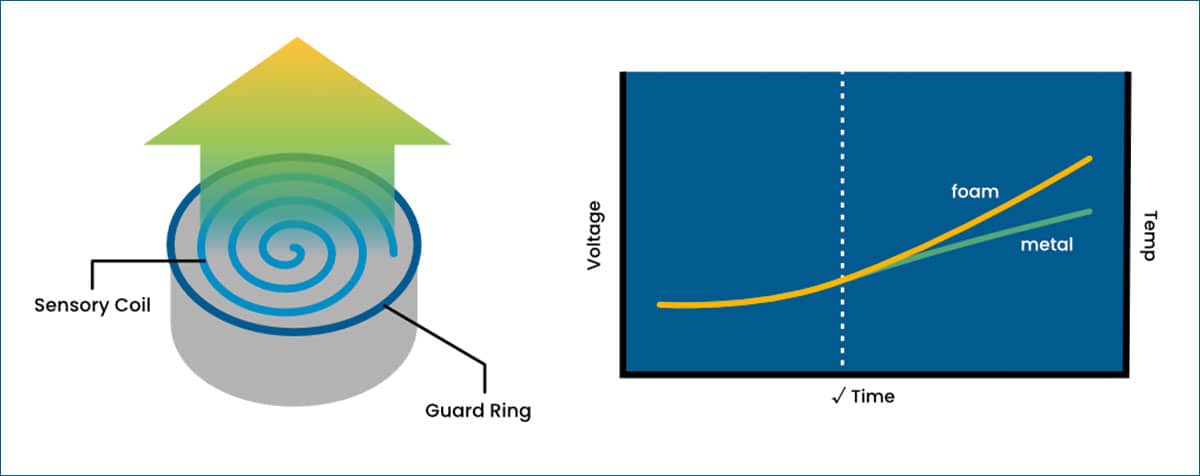
MTPS is a method of measuring thermal conductivity and thermal effusivity. The system works by pulsing a current through a spiral-shaped wire, acting as both a heating element and sensor, and a guard ring for a brief period. The wires heat the sample in one direction at the sensor-sample interface. Meanwhile, the guard ring helps to approximate uni-directional heat flow.
Since the sensor’s resistance is temperature-dependent, the voltage drop of the sensor can be measured over time. This gives an indication of the thermal effusivity of the sample. A material with high effusivity will wick away the heat more quickly, while one with low effusivity will struggle to transfer heat away. This will cause an increase in temperature in the coil; thus, the voltage will rise.
A CLEAR UNDERSTANDING
Understanding Heat Capacity
The temperature of a material is the manifestation of the amount of thermal energy it possesses, but how much it rises for a given amount of energy is heavily influenced by the material’s density and heat capacity. The heat capacity of a material is often described with reference to either its density (specific heat capacity) or volume (volumetric heat capacity).
How is heat capacity quantified?
This can be thought of as the effort required to increase the temperature of one unit of mass of material by one unit of temperature (the SI unit being Joule per kg per Kelvin).
When you multiply the specific heat capacity by the density of the material, you have the volumetric heat capacity. This is the effort required to increase the temperature of one-unit volume of material by one Kelvin (the SI unit being one Joule per metre³ per Kelvin).
Assessing heat capacity
A low specific heat capacity means that a relatively low amount of heat is required to increase the temperature of the material. Conversely, a high specific heat capacity will require comparatively more energy to raise the temperature.
The video displays this taking place.
Want to find out which industries our thermal sample testing services can support? Visit our industries pages.
Upon receipt of your samples, we will:

Measure
Measure the appropriate properties (thermal conductivity, diffusivity, effusivity, heat capacity, etc.) of most relevance to your materials.

Present
Present and explain the results, discussing the insights gained with reference to your specific needs.

Support
Provide you with the support necessary to maximise the potential of the analyses and confidently communicate and discuss the findings.
Other techniques & capabilities
Find out more about our other techniques and capabilities by following the links below.