
Want to know how we help others in your industry?
Food & Beverage
How we help
Common problems we solve for food and beverage:
Predict Texture, Mouthfeel & Astringency
Rheology measures thickness and texture, while tribology captures mouthfeel by measuring friction between soft surfaces. Testing with mucin also reveals insights into astringency.
Benchmark Foam Stability
Dynamic foam analysis measures how a foam forms, drains and collapses over time. Interfacial and rheological measurements then reveal the physical properties governing foaming performance.
Predict Emulsion and Suspension Stability
Oscillatory and controlled stress rheology measure the delicate structures formed between particles and droplets. Zeta potential adds the electrostatic picture, giving nuanced insights into stability.
Capture Melt, Cooling & Crystallisation
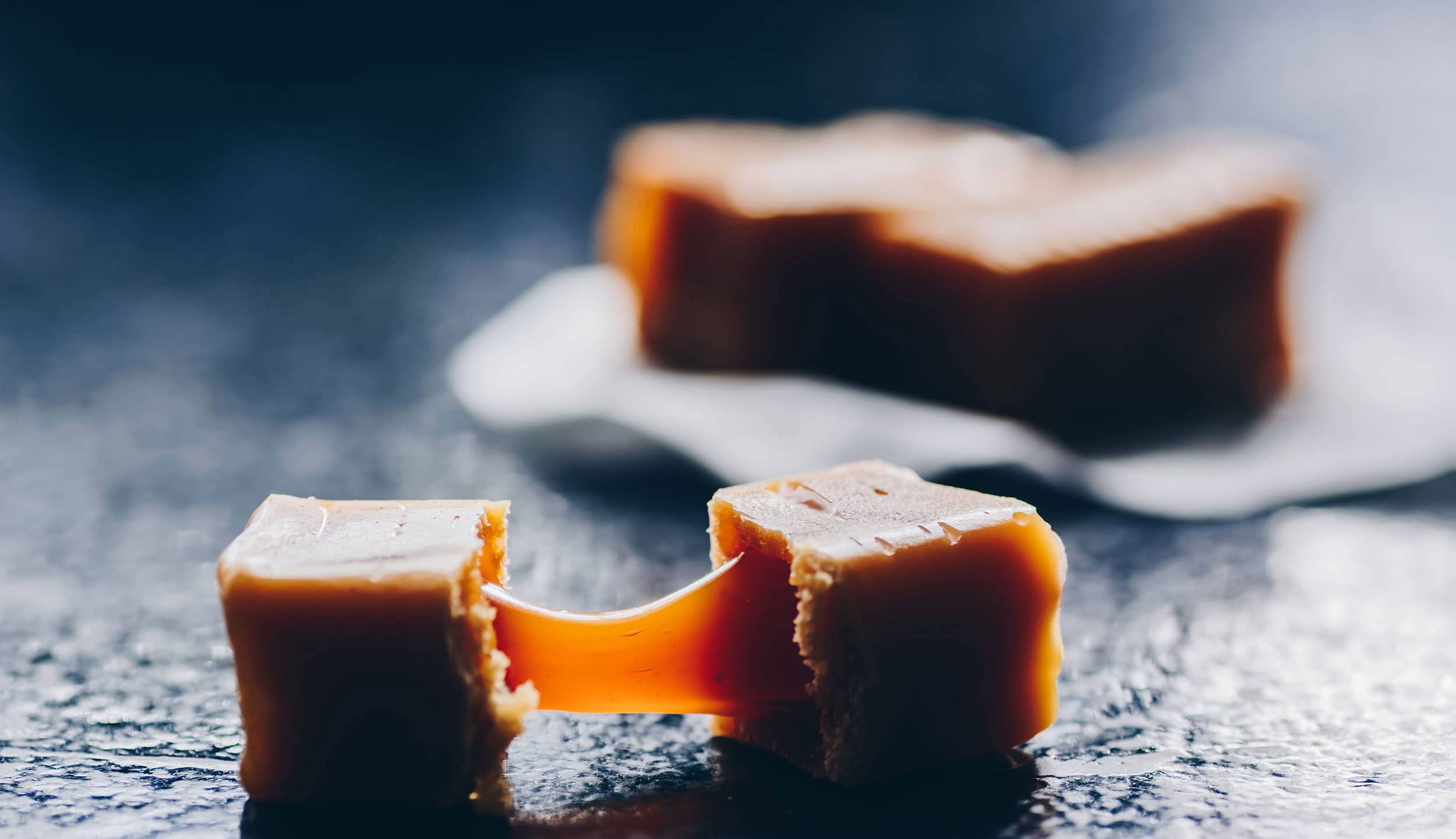
Oscillatory temperature ramps identify when a fat turns solid-like on cooling and liquid-like on heating. Comparing fats this way helps match melt behaviour, texture and mouthfeel.
Assess Powder Caking
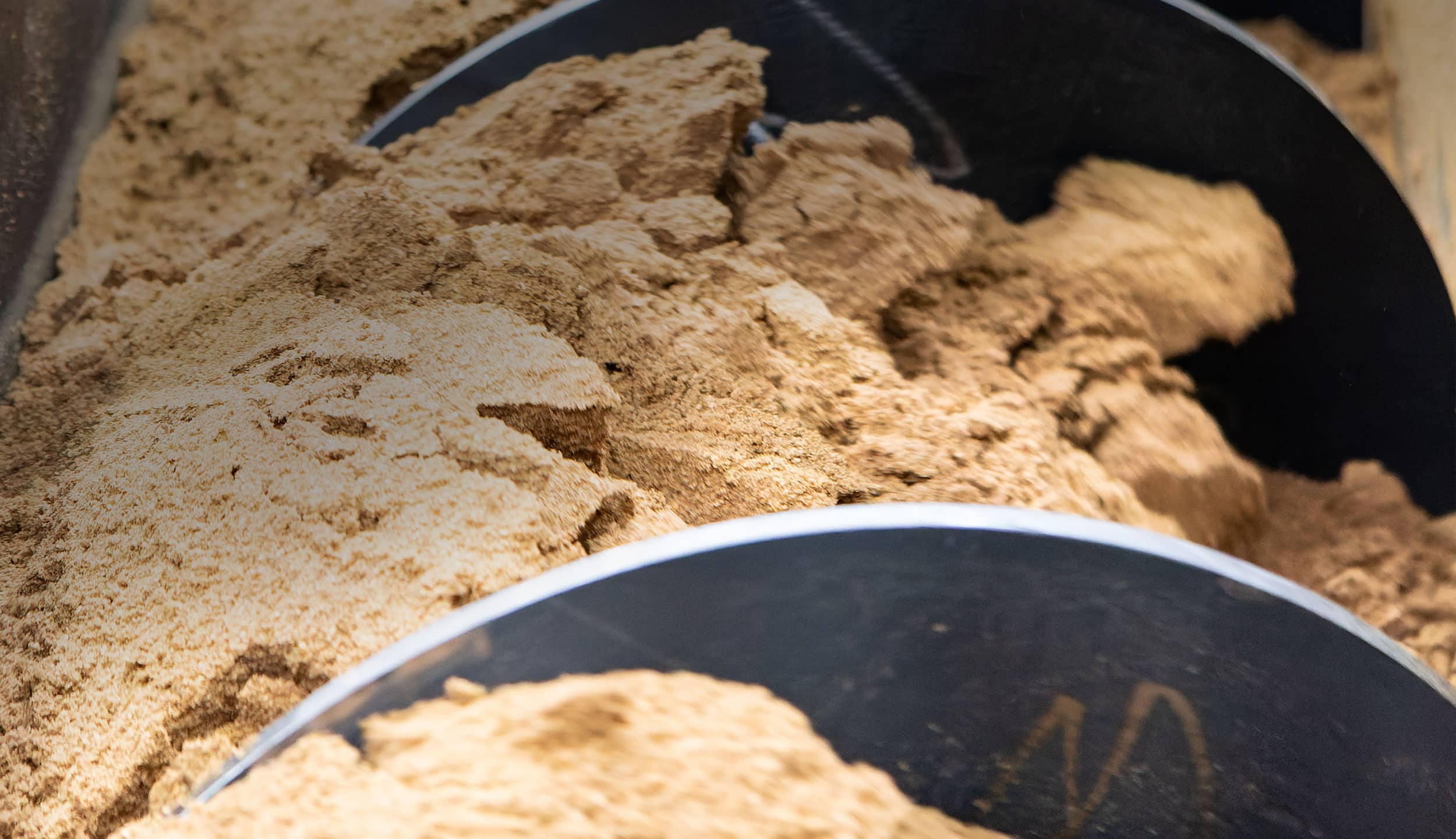
Dynamic powder testing measures how flow changes after conditioning at controlled humidity and temperature. This reveals caking risk before it causes blockages, waste or uneven coating.
Improve Predictability of Processing
Rotational and thixotropy testing capture how a product pumps, clings and coats under process shear. Oscillatory testing adds structure, showing how each process variable affects performance.
Working With You
Your Partner in Rheology and Physical testing
Our tribology and rheology lab for food and drink provides expert, economical and swift sample measurements for our clients. We deliver their results with friendly and accessible support, ensuring our clients can fully exploit the value of the insights generated. These benefit various people within the industry.
New Product Designers
- Predict appearance, handling and texture with reduced reliance on sensory panels
- Select and replace ingredients for sustainability, performance and economy
- Compare alternative proteins and fats to animal-based benchmarks
Process Designers
- Predict the impact of shear and temperature regimes on manufactured products
- Specify pumps, heat exchangers and other plant
- Investigate gelation, crystallisation, melting and drying processes
Quality Controllers
- Investigate changes in incoming raw materials such as stabilisers, thickeners, proteins and fats
- Assess stability and shelf life
- Establish benchmarks for finished product texture
Common Questions Answered
Challenges and Solutions
Challenge
“We’re developing plant-based milks for baristas. How can we compare the foam stability and texture of our formulations with our competitors’?”
Solution
The effective combination of dynamic foam analysis, interfacial rheology and bulk foam rheology measurements enables the characterisation and comparison of foams produced from various dairy and alternative milks. Dynamic foam analysis enables the quantification of foamability and stability at a range of temperatures. Interfacial rheology provides fundamental insights into the air/milk interface. Bulk foam rheology delivers information on handling and texture.
Using these techniques, the data-driven innovator can investigate the impact of formulation and process choices and benchmark against competitor products to produce barista-friendly products.

Challenge
“My vegan cheese melts like real cheese, and I want to support my claim with data.”
Solution
The softness and ooze of melted cheese can be described by rheology testing across a range of temperatures. Thermorheological profiling methods for cheeses entail measuring parameters like rigidity and elasticity throughout the melt and on subsequent cooling. Various data analysis approaches then allow us to compare plant-based cheese brands and quantify their similarity to dairy-based counterparts.
Challenge
“Astringency is an issue for our products. We want a predictive measure to help us fast-track our reformulations.”
Solution
Tribology measurements offer a fast and straightforward method to identify astringency in food and drink. This powerful tool can reduce dependence on costly and time-consuming sensory panel tests and help product developers fast-track novel innovations to the marketplace.
Loss of lubrication of salivary mucins has been identified as a significant contributor to astringency. This can occur when mucin molecules in saliva come into contact with, for example, tannins in a food or drink. Tribology measurements on mucin solutions in contact with newly developed food and drink products can allow rapid screening and identification of these lubrication changes.
Challenge
“We’re developing alternative fats that cool and solidify like animal-based ones, but we need some numbers to prove it.”
Solution
Thermorheological profiling enables the easy comparison and easy demonstration of fat crystallisation “signatures” on cooling. The technique entails measuring the structure and rigidity properties of soft gel networks that form as a molten fat solidifies. The impact on the final structure resulting from variations in cooling rate or the application of imposed shear can be easily assessed and quantified.
Reach out to us for more details on how our food and drink rheology testing can benefit your business
What We Analyse
The Physical Properties of Successful Food and Drink
The consumer acceptance, easy processing and stable shelf-life of winning food products result from optimum structure and physical properties.
Rheology: The viscosity, structure/gel strength, stiffness, and viscoelasticity of liquids and semisolids.
Tribology: The friction of contacting surfaces, such as the tongue, lips and palate, and the lubrication of those surfaces with saliva, food and drinks.
Interfacial properties: Surface and interfacial tension and interfacial rheology at air/liquid interfaces in foams and liquid/liquid interfaces in emulsions.
Powder flow: The cohesion, adhesion, compressibility, aeration and caking of bulk solids.
Having access to measurements of these properties equips the shrewd formulator, process designer or quality-assurance manager with the insights necessary to gain an immediate edge in a competitive and demanding landscape.
About us
Get in touch
Custom tribology attachment
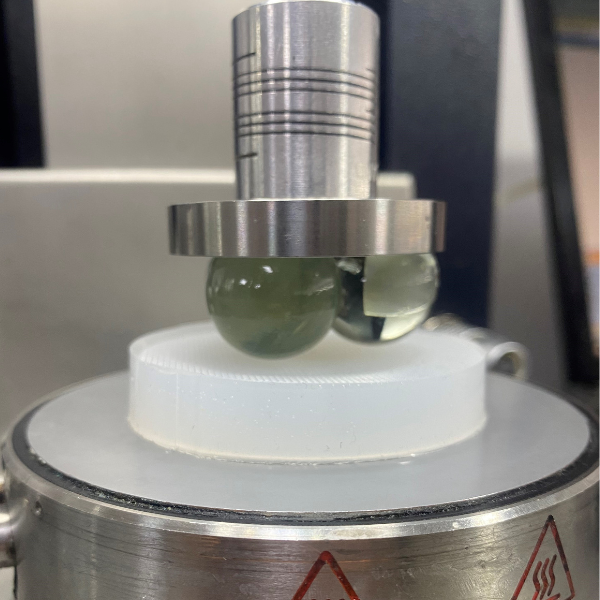
Learn more about our rheology, tribology and texture analysis services for food and drink by following the link.
Food and Drink Case Studies and Articles


















The Methods We Use
Relevant Techniques
You can find out more about the techniques we use in our food and drink testing by reading the pages below.