
Want to know how we help others in your industry?
How we help
Common problems we solve for adhesives and sealants:
Profile Cold Performance
Oscillatory temperature sweeps track how rigidity builds as greases cool. Phase angle reveals subtle structural changes that single-point temperature specifications cannot capture.
Predict Pumpability
Rotational rheology profiles viscosity across the shear rates seen in pumping, dispensing and lubrication. Holding at high shear shows whether structure survives repeated passes through the system.
Screen Alternative Thickeners
Rotational and oscillatory rheology compare alternative thickeners with lithium grease at rest and under shear. Thixotropy testing shows which recovers structure most like lithium.
Quantify Ageing Effects
Oscillatory temperature ramps compare fresh grease against thermally aged samples. Phase angle and modulus reveal how the thickener network degrades across the service temperature range.
Increase Load Capacity Without A Frictional Penalty
Axial testing can measure the normal stress generated by a lubricant under shear. Raising normal stress can increase the load capacity without the frictional penalty that comes from raising viscosity.
Specify Heat Transfer
Rotational rheology profiles viscosity against temperature for pump specification and system design. Thermal conductivity and heat capacity testing quantifies how efficiently the fluid carries heat away.
Working With You
Your Partner in Rheology and Physical Testing
We provide expert, economical, and swift sample analyses of oils and greases for our clients. We deliver results with friendly and accessible support to ensure our clients can fully exploit the value of the insights generated and confidently communicate those insights to other stakeholders.
Common Questions Answered
Challenges and Solutions
Challenge
“I would like a better differentiator of the low-temperature performance of our greases than mere pour-point measurements.”
Solution
Our rheology profiling lab conducts oscillatory rheology measurements across various temperatures. These deliver useful “thermorheological fingerprints” for comparing greases. These plots of rigidity and elastic structure vs temperature reveal subtle differences between formulations that may elude simple pour-point measurements.

Challenge
“How can I study the crystallisation and gelation of our sustainable thickener systems?”
Solution
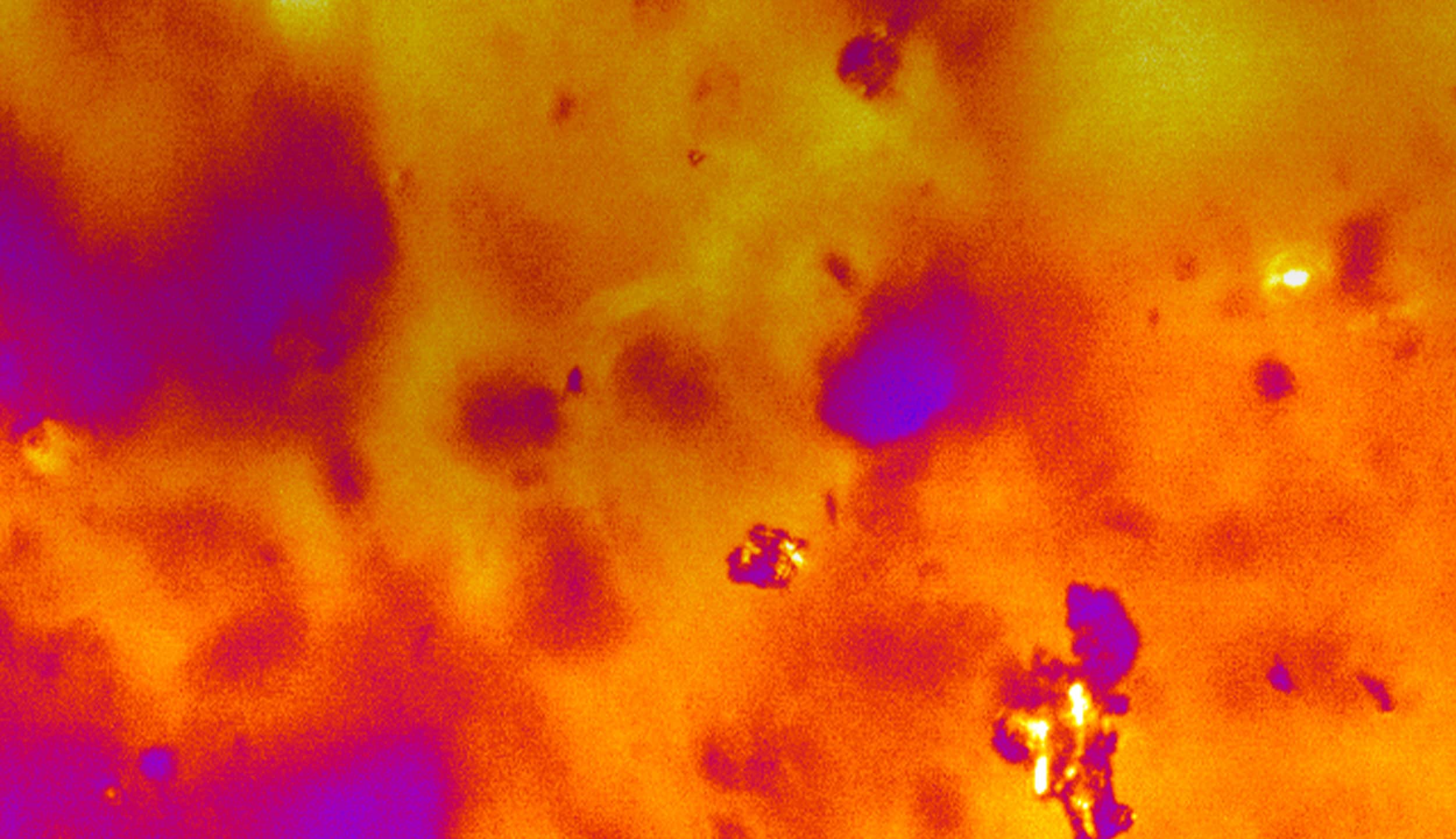
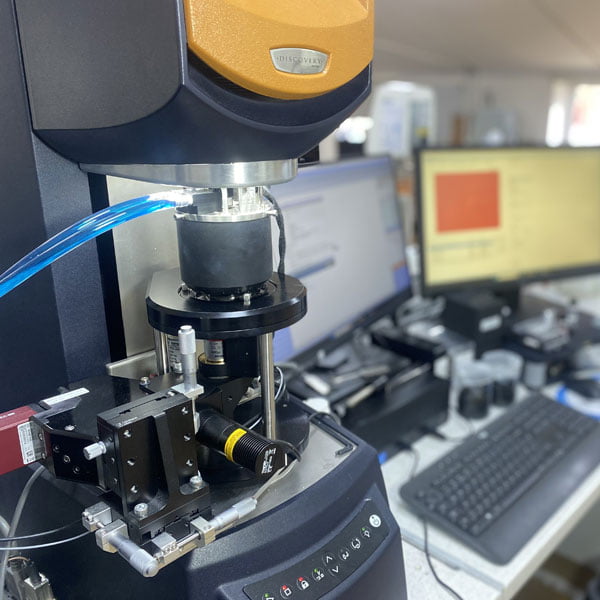
We can study the crystallisation and gelation of your sustainable thickener systems using the technique of rheo-microscopy. This combines rheology and microscopy, allowing for visual examinations of how samples behave under shear while concurrently collecting rheological data.
Two of the fundamental changes we can track with rheo-microscopy are crystallisation and gelation, as well as melt profiles and structural destruction and recovery. Thanks to our advanced equipment, we can control the temperatures of samples and capture detailed images at a high frame rate.
Challenge
“How can I better understand the pumping and heat-transfer properties of my heat-exchange fluids?”
Solution
Understanding the pumping and heat-transfer properties of heat-exchange fluids necessitates a study of their viscosity and thermal conductivity. The addition of performance additives can impact these properties; hence, they need to be balanced for the intended application.
For this, accurate viscosity measurements help to assess pumpability, while thermal conductivity ensures efficient heat transfer. Our lab provides reliable data for these crucial behaviours, aiding formulation design.
Follow the link for more information on how our lab tests oils, greases and more.
Oils and Greases Case Studies and Articles
What We Do
The Physical Properties of Oils and Greases
Rheology, interfacial, thermal and foaming properties are critical for oils and greases. An understanding of these properties can help you predict handling, transport, storage, and performance attributes for lubrication, protection and heat transfer applications.
Rheology measurements of oils can deliver viscosity and viscoelasticity comparisons for additive formulation activities. Additionally, measurements of lubricant viscosity and elastic structure can demonstrate the impact of ageing and soot loading on pumpability.
Greases must offer adhesion and flow resistance to maintain delivery of lubricant to the appropriate site whilst not presenting excessive resistance under low-temperature start-up and “cold-cranking” conditions.
Air retention, foaming and wetting behaviour can impact the performance of lubricants and heat transfer liquids.
About us
Get in touch
Rheo-microscopy attachment
Contact us today to find out more about rheological and interfacial testing for oils, greases and waxes


















The Methods We Use
Relevant Techniques
You can learn more about how our rheology testing lab for oils and greases can support you by following the links below.