
Skip links

Applications of Rheology

Sustainable Polymer Screening Toolkit

Oscillatory and capillary rheology are well-established but underutilised methods for screening polymers, offering a route to address concerns about recyclate quality. Recent work from the University of Manchester, published in Nature Communications, has built on the standard oscillatory rheological approach to reveal new insights into

Tempura Batter Processability – Reducing Batch Failures Using Rheology

Challenge – Inherent Process Variability in High-Throughput Food Manufacturing A tempura batter manufacturer experiencing significant batch failures approached us to help them stabilise their production line. Their situation highlighted a challenge common to high-throughput food manufacturing, where even small process variability can affect product consistency

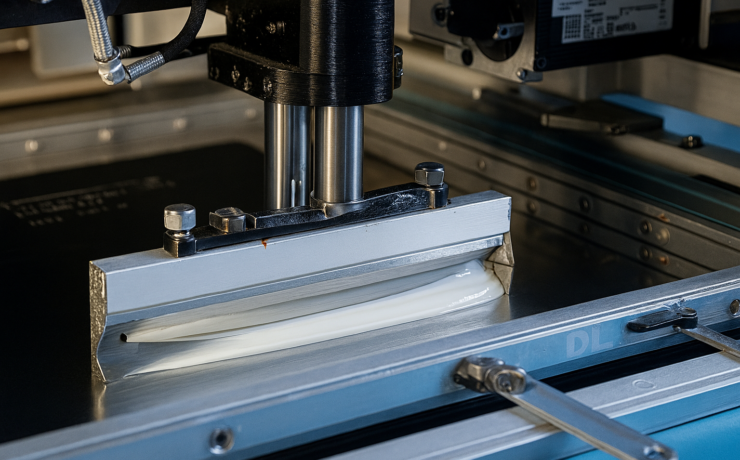
Solving Slumping and Stability Issues in Screen Printing Using Rheology

Challenge A manufacturer of printed electronics approached us with a persistent and costly print quality problem that was disrupting their production line. Some of their silver-loaded screen-printing paste was producing inconsistent results that were proving difficult to diagnose and resolve through process adjustments alone.   Specifically,

Temperature Profiling: Material Characterisation

Supporting a wide range of industries, we provide high-precision testing for materials across a wide range of temperatures. From Dynamic and Kinematic Viscosity to Density, Surface Tension, and Thermal Conductivity – including Specific Heat Capacity and Zeta Potential – we handle all types of testing.

Understanding the Effects of Temperature on Surface Tension 

At the Centre for Industrial Rheology, we provide comprehensive interfacial characterisation services. For surface tension specifically, we utilise two key methods:  Drop Shape Analysis, which primarily focuses on measurements after roughly 1 second of surface age.   Bubble Pressure Tensiometry, which extends this analysis down to

Foam Stability Prediction: Interfacial Rheology Measurements

Optimum interfacial rheology properties can impart stability in foams. In simple terms, robust, elastic films surrounding bubbles tend to reduce liquid drainage, rupture and coalescence. Our laboratory provides expert interfacial rheology measurements to capture and quantify these properties for researchers aiming to accurately predict and

Predicting Powder Compaction with Powder Flow Analysis

Powders experience a multitude of challenges during transport, namely vibrations and bulk compression, but also temperature and humidity changes. Dynamic Powder Flow Analysis (DPFA) provides a direct measurement of the propensity for the vibration-induced immobilisation of powders and bulk solids during transportation, be it air,