
Skip links

Cosmetics and Personal Care

Rheology-Driven Prediction of Sunscreen Stability

Challenge A customer developing a new SPF50 suncream spray needed to validate the stability of their formulations before committing to any reformulation decisions and subsequent scale-up. Traditional stability testing meant months of delay, with no early indication of where formulations were failing. They needed a way to benchmark their stability and identify any weaknesses

Comparing Lamella and Surfactant Structures with Rheo-Impedance Spectroscopy

Rheo-Impedance Spectroscopy is a novel development that combines two powerful material characterisation approaches: rheological profiling and electrochemical impedance spectroscopy. The ability to simultaneously capture microstructural information from both techniques, whilst changing shear and temperature conditions, provides formulators with a potent capability in their measurement toolkit. 

Brush, Foam, Repeat: Not without Interfacial Rheology!

The lab team at the Centre for Industrial Rheology examined two toothpaste samples to compare foaming properties and uncover what physical characteristics could be contributing to any differing properties. Surface tension is typically a key factor influencing foaming properties. However, as found within this case study,

Ahead of the (Salt) Curve: Unleashing Surfactant Rheology

When assessing salt curves, testing is commonly performed using a simple viscometer. These viscometers provide limited data, as they don’t have the ability to measure viscoelasticity, or viscosity as a function of shear rate. This limits the ability to measure the shear-dependent viscosity of non-Newtonian

Using Rheology and Tribology to Predict Sensory Properties

  I hope this is helpful for you, if you have any questions on using rheology and tribology to predict sensory properties, or you’d like some training or advice then don’t hesitate to get in touch Video Transcript for Using Rheology and Tribology to Predict

Shampoo Foam Analysis – Head and Shoulders Above the Rest

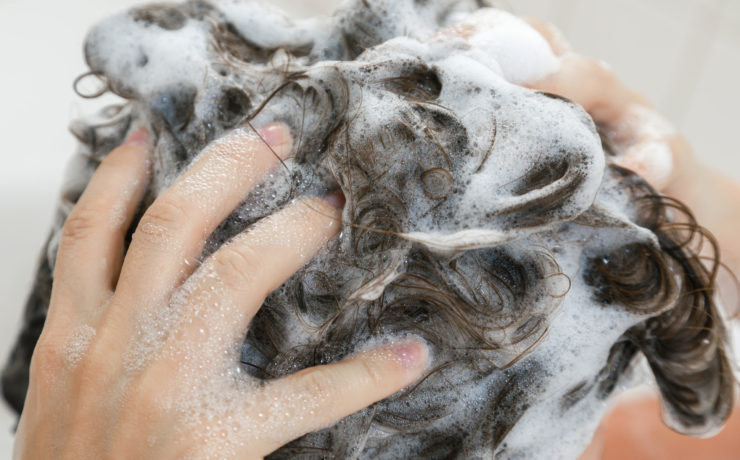
  Using dynamic foam analysis methods, we determined important properties of shampoo foams such as drainage, height, volume, and bubble size, all of which are direct indicators of foam (in)stability. We also captured time-resolved images of the foams allowing for analysis of their structure both

Benchmarking Film Formers for Cosmetics

Dynamic surface rheology is a technique that can be used to monitor the formation of films, or drying on the surface, of a bulk material. In this case study, we used dynamic surface rheology to monitor the physical drying behaviour of cosmetic foundations, alongside drop-shape