
Skip links

Applications of Rheology

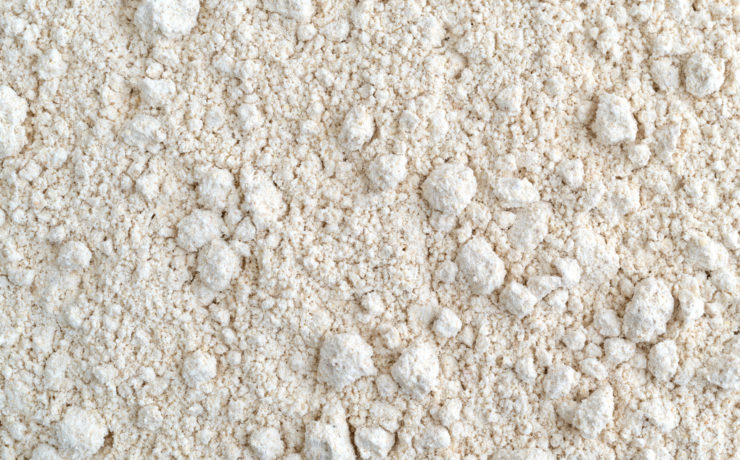
Rapid Prediction of Powder Caking, Crusting and Agglomeration

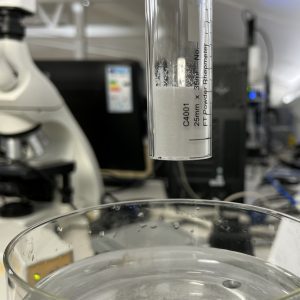
Powder caking is a universally experienced phenomenon with the potential to ruin production runs and grind factories to a halt. A robust caking study can provide early indicators of a powder’s propensity to cake, identifying major contributing factors to the phenomenon and potentially indicating working
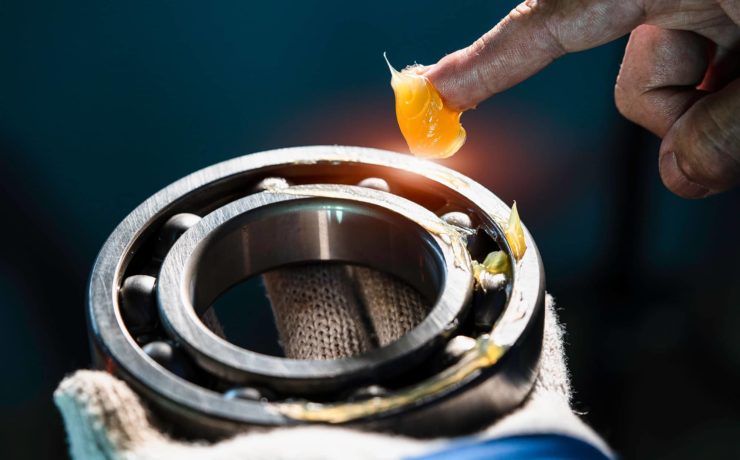
Grease is the word! Thermorheological Fingerprinting of Greases

The use of rheology can help those in Research and Development, Quality Assurance or Process Development determine the behaviours of a grease or oil formulation at elevated, ambient and cooled temperatures. Oscillatory testing is an advanced rheological technique that allows for identification and quantification of

Interfacial Rheology for Beginners

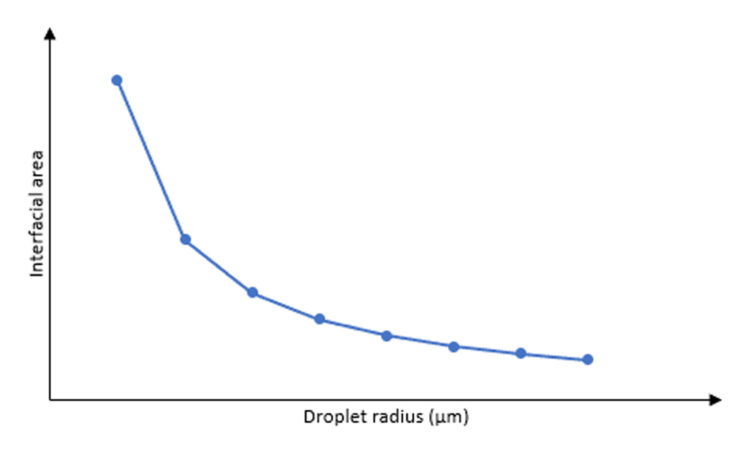
When you consider that the average bottle of body lotion or food dressing is knitted together with oil/water interfaces that can span a tennis court in area, it is not surprising that the strength, flexibility and robustness of those interfaces is critical for a stable

Powder wetting by Washburn capillary rise

Powder Wettability Testing

Powder wettability measurements are vital for predicting or understanding the interaction between a powder and a liquid in several key processes. For example, dispersibility of powders into a liquid, improving bioavailability of drugs, minimising powder-liquid mixing issues, ensuring the ground is appropriate for farming, building,

Predicting Thermal Degradation of Polymers

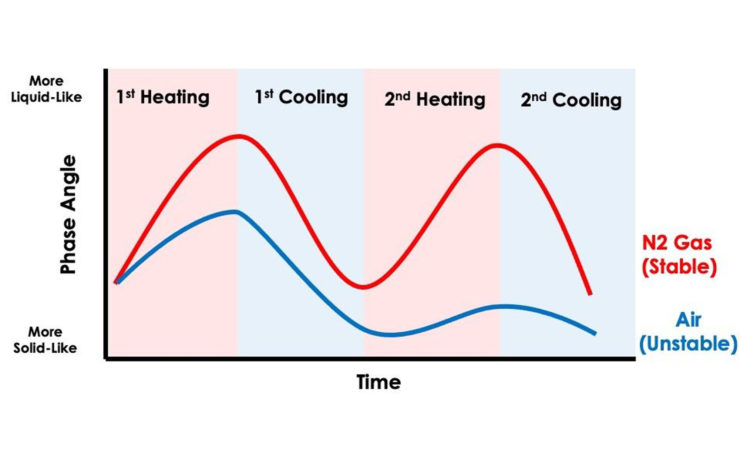
We can identify how specific process parameters such as applied shear or various temperatures can affect the quality of your polymer melt during processing. Our lab is equipped with both a high temperature oven (500°C) and nitrogen purge system for investigating temperature driven changes in

Melt Rheological Screening for Recycled Polymers

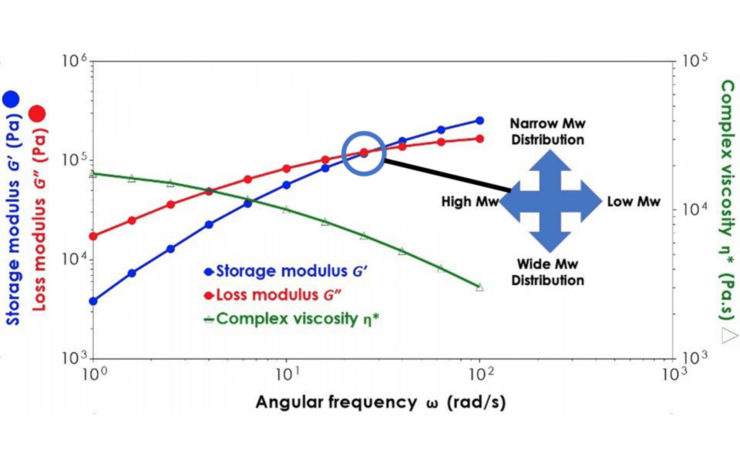
We can provide rheological benchmarking of recycled polymers to help identify minimum requirements for virgin plastic additions. Accurately and quickly quantify the share of virgin and recycled polymer required to achieve a desired quality of product for application. Our lab can also identify to what

Interfacial Rheology Measurements for Foam Formation and Stability Insights

We measure the tension and rheology (modulus and elasticity) of liquid/liquid and liquid/air interfaces for companies looking to create optimum foam formation or retention/stability behaviours. The Centre for Industrial Rheology performs several characterisations including dilatational interfacial measurements, shear interfacial measurements and dynamic interfacial analyses alongside

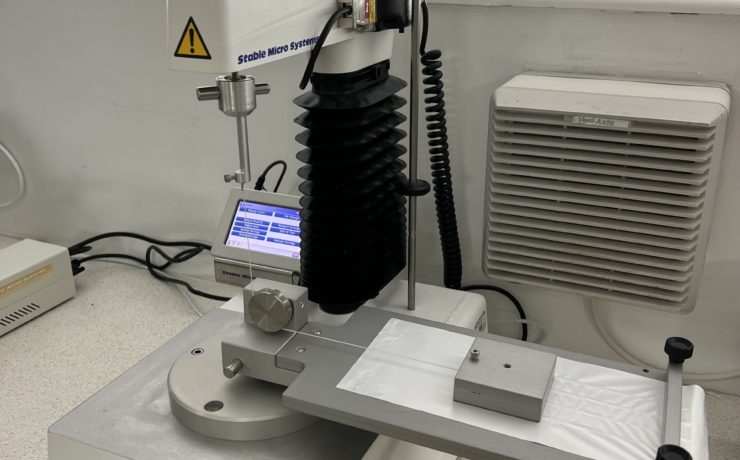
coefficient of friction set-up

Coefficient of Friction Testing Service

  We provide a friction testing service for characterising the ‘static’ and ‘kinetic’ coefficients of friction of plastic film and sheeting. The sled-plane method can also act as a useful starting point for customised methods for investigating or measuring friction force in a number of

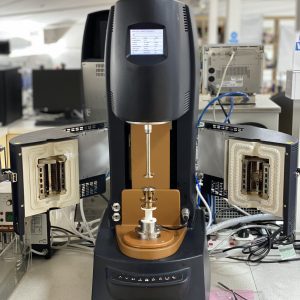
High Temperature Rheology Characterisation Service

High-temperature rheology measurements are useful for materials such as oils, plastics, resins, greases, and binders or to characterise the behaviour of feedstock in high-temperature industrial processes such as cooking, pasteurisation or any thermally accelerated chemical reaction. Many materials which are typically very tough or rigid