
Challenge
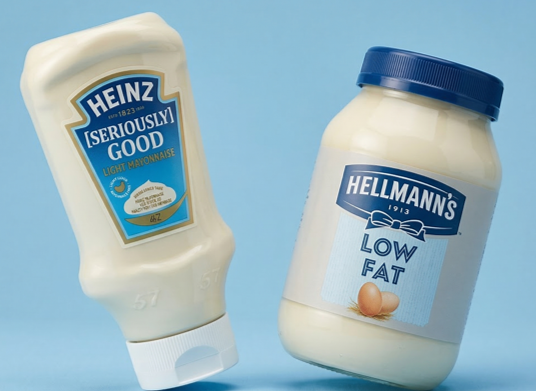 Consumer demand for reduced-fat products continues to grow across the food industry, and reducing fat in mayonnaise can be a more complex challenge than it may first appear. With oil accounting for 70-85% of a typical full-fat formulation, reducing it fundamentally alters the physical behaviour of the product, such as its texture, mouthfeel and stability. These differences are not always easy to quantify without the right analytical tools.
For formulators, this poses a significant risk of investing substantial time and resources in approaches that ultimately fail to replicate the consumer experience of a full-fat product. Traditional reliance on iterative trial-and-error and subjective sensory evaluation can make the path to a successful reduced-fat formulation slow and unpredictable.
Solution
Advanced rheological characterisation offers a more efficient route to formulation optimisation, providing objective data that allows teams to identify the most promising strategies earlier and with greater confidence. To demonstrate how rheological characterisation can support fat-reduction formulation decisions, we compared full-fat and reduced-fat mayonnaise products from two leading brands, Hellman’s and Heinz, each of which has adopted a distinct approach to fat replacement.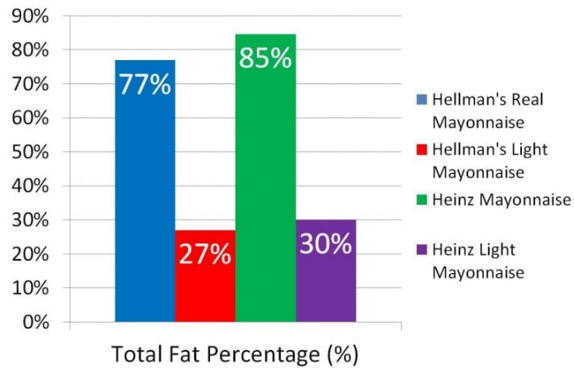
Hellmann’s Light Mayonnaise relies on a combination of hydrocolloid gums and starch to restore texture, while Heinz has opted primarily for a starch-based thickening system. With Hellmann’s full-fat product at 77% fat and Heinz at 85%, and their respective reduced-fat variants at 27% and 30%, these products offer a useful real-world comparison of how different formulation strategies perform.
We evaluated each product across three complementary rheological test methods.
- Viscosity across a range of shear rates to assess flow behaviour
- Normal stress measurements as an indicator of extensional behaviour, such as stringing or tailing
- Oscillatory testing for quantifying structure and rigidity
Together, these three measurements provide a picture of how each fat-reduction strategy influences the texture, stability, and sensory characteristics of the final product.
Business Impact
For formulation development teams working under commercial pressure to deliver reduced-fat reformulations, the ability to make confident formulation decisions quickly is imperative. Rheological characterisation provides an objective, data-driven framework for evaluating ingredient strategies early in development.
- Faster formulation screening – rapidly benchmark multiple fat-replacement approaches against a full-fat reference, allowing promising candidates to be identified before committing to pilot-scale trials
- Greater confidence in improved formulation decisions – quantitative measurements provide clear insights into how different ingredients influence texture and sensory performance
- Reduced development risk – potential issues such as excessive stiffness, poor flow behaviour or undesirable extensional properties can be identified early in development
- More efficient ingredient benchmarking – when multiple suppliers are evaluated, consistent analytical methods enable direct, objective comparisons that subjective sensory evaluation alone may not reliably provide.
At the Centre for Industrial Rheology, we routinely work with complex emulsions and structured liquids, and our rapid turnaround times are designed to align with the pace of active development programmes. Whether you are in the early stages of exploring fat-reduction strategies or looking to benchmark a near-final formulation, our characterisation capabilities can provide the data your team needs to move forward with confidence.
Book a chat with our team to discuss how we can help you solve similar problems
Contact Us
Results
This investigation clearly demonstrated that different fat-reduction strategies can have a measurable impact on textural and sensory outcomes.
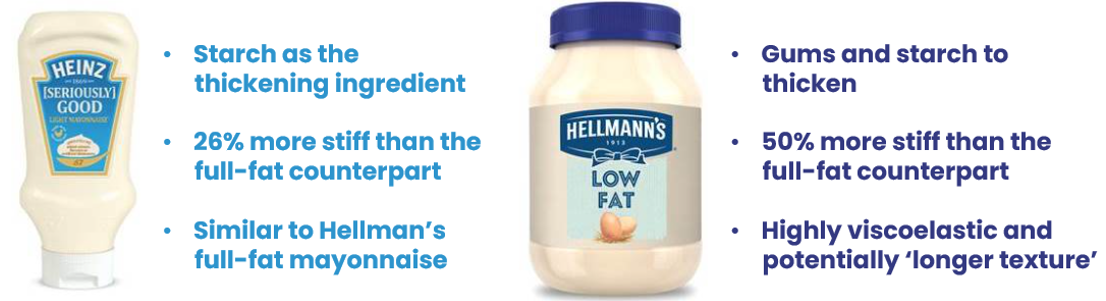
Heinz Light Mayonnaise, thickened primarily with starch, produced flow behaviour considerably closer to that of a full-fat product. Its viscosity profile showed reasonable alignment with Hellmann’s full-fat mayonnaise, and normal stress generation remained relatively modest, suggesting limited extensional behaviour during dispensing or consumption. Structurally, it measured approximately 26% stiffer than its own full-fat counterpart, a moderate increase.
Hellmann’s Light Mayonnaise, by contrast, told a different story. The gum-based thickening system produced a substantially stiffer formulation, approximately 50% stiffer than its full-fat equivalent, with a pronounced increase in normal stress growth, indicative of extensional behaviour. This suggests a greater tendency towards a “longer” texture or “stringing” behaviour.
These differences would not be readily apparent from a single basic viscosity measurement, underscoring the value of a multi-method rheological approach. The full analytical data supporting these findings are presented in the Analytical Findings section.
Extending The Study
While rheology alone provides a strong foundation for evaluating fat-reduction strategies, a more complete understanding of formulation performance can be developed by incorporating our suite of complementary techniques, particularly where mouthfeel and emulsion stability are key concerns.
For characterising lubricity and mouthfeel directly, our custom soft-tribology setup is a particularly valuable addition that complements rheological measurements. For emulsion stability, interfacial rheology, zero-shear viscosity and zeta potential measurements offer even further insights.
Analytical Findings
High-Shear Viscosity Measurements
A common but noteworthy observation is that all mayonnaises shown start with a stress above zero, meaning they behave as solids until the applied stress exceeds this value, known as the yield stress. We like to describe materials with this characteristic as structured liquids, which you can think of as solids that can be made to flow.
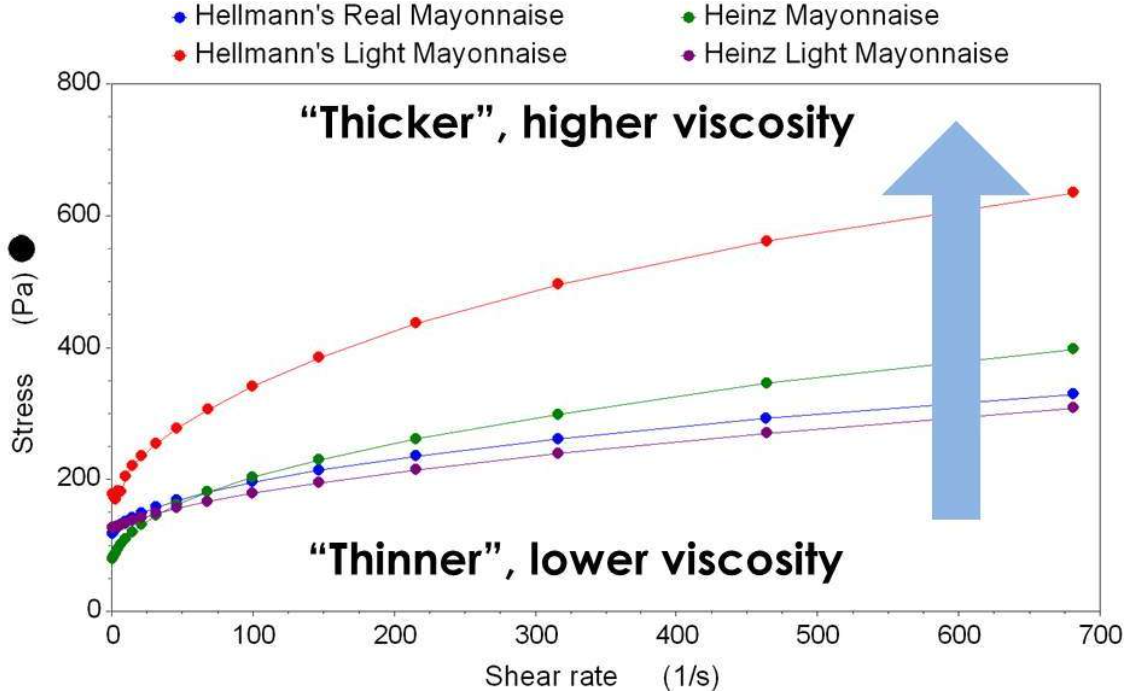
Hellmann’s Light Mayonnaise requires approximately twice the effort to initiate flow compared to its full-fat counterpart. This can affect several properties, including processability, delivery from a container, and its mouthfeel perception during consumption. Heinz Light Mayonnaise, by contrast, maintains a much closer approximation to full-fat flow behaviour, showing strong similarity to Hellmann’s full-fat product across the measured shear rate range.
Normal Stress Generation – A Potential Indicator of “Stringiness”
Many materials that display extensional behaviour also generate a normal stress when sheared, perpendicular to the plane of shear. A high rate of normal stress growth can be a useful correlate for investigating and quantifying extensional behaviours.
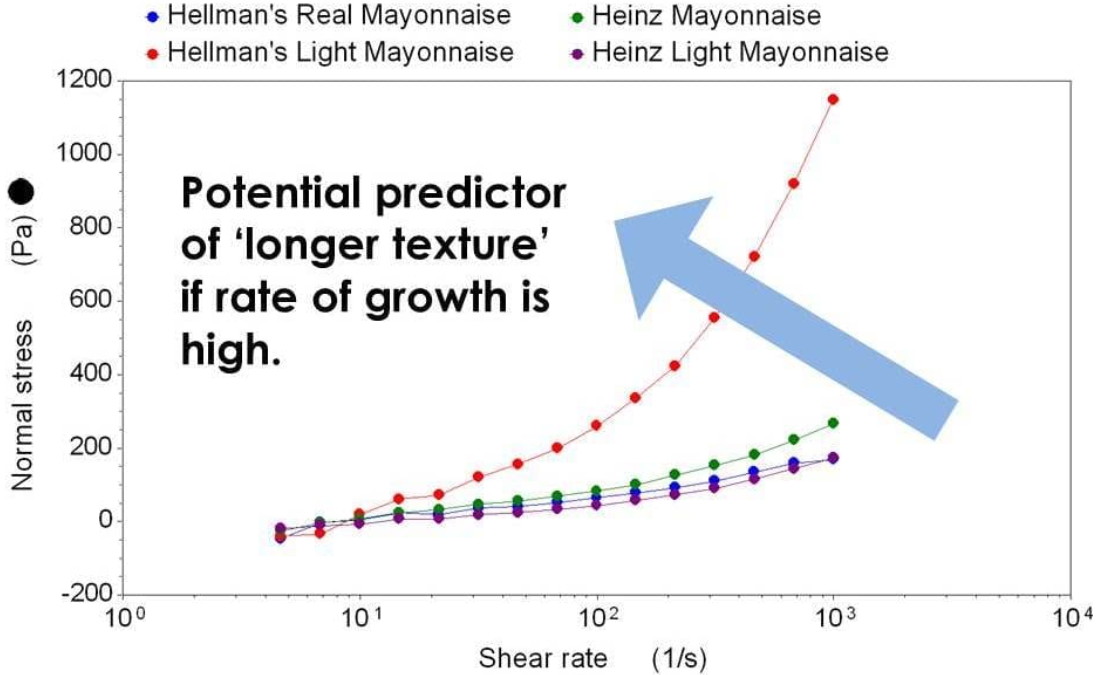
Hellmann’s Light Mayonnaise exhibits a marked increase in normal stress growth compared to the other formulations. In practical terms, this suggests a greater tendency towards a longer, stringier texture during spooning or spreading. When well-controlled, this type of behaviour can contribute positively to lubrication during oral processing, but in excess, it can result in a texture that consumers find unpleasant.
Dynamic Oscillatory Testing – Quantifying Stiffness and Structure
In the world of rheology, the ability of a material to bounce back to its original shape is considered a property of solid materials. When a stress is applied to a material, the degree of deformation or strain is measured, the stress is removed, and the ability of the material to return to its original condition is observed. This is exactly what happens with dynamic oscillatory testing – we start off by wobbling the sample with incredibly gentle stresses aimed at minimising disruption to the sample and gradually increase the stress until we detect that the material has deformed permanently.
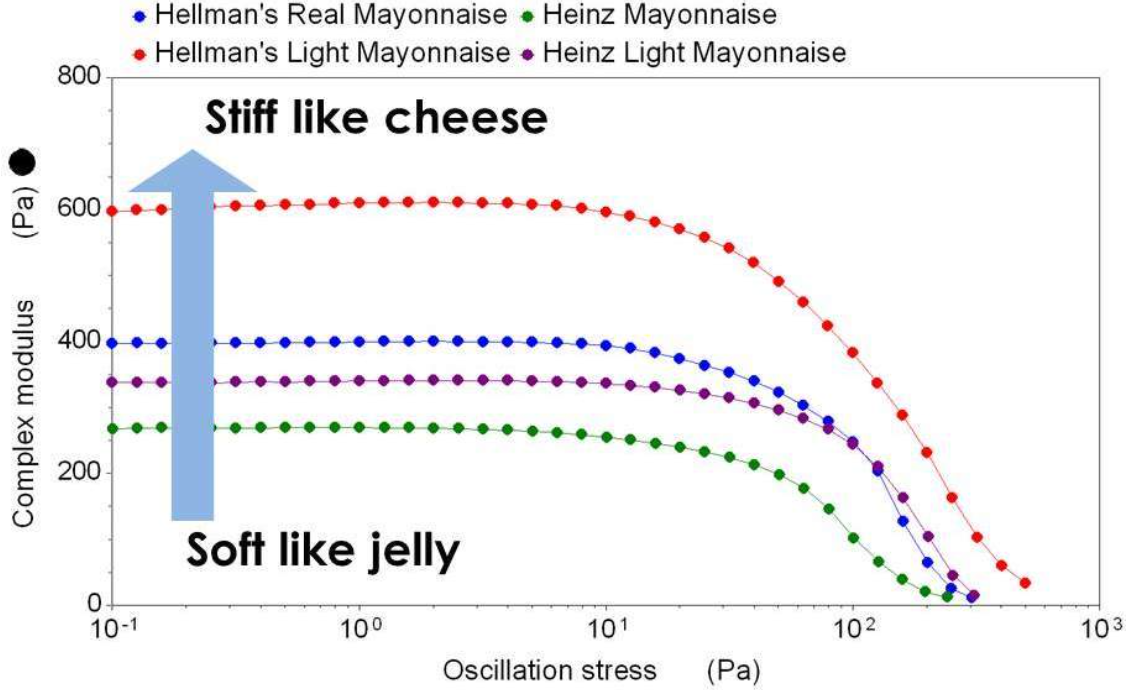
In this plot, we see oscillatory stress along the x-axis and complex modulus along the y-axis, how hard we push the material against how stiff the material behaves. Materials with high complex modulus values are likely to be stiff like cheese, whereas materials with low values are likely to be soft and wobbly like jelly.
Hellmann’s Light Mayonnaise is the stiffest of the four products tested and would be expected to hold a well-defined shape, forming a firm dollop before eventually yielding under its own weight. Heinz Light Mayonnaise shows a more moderate increase in stiffness relative to its full-fat equivalent, resulting in a structural profile closer to full-fat behaviour. Heinz full-fat mayonnaise is the least structurally rigid of the set, so it is likely to have less structural definition.
Related Articles;
Using Soft-Tribology to Quantify The Mouthfeel of Plant Based Protein Products
Predicting Formulation Stability: Advanced Insights for Suspensions and Emulsions